Jingzhi Bao
 B.Eng., The Chinese University of Hong Kong, Shenzhen (2025)
My research focuses on post-training (RL) for image/multimodal generation, and pre-training, post-training, and data pipeline construction for 3D foundation models.
I expect to graduate in February 2027 and am actively seeking full-time opportunities!

Education

University of Illinois Urbana-Champaign (UIUC)
Master of Computer Science
Sep. 2025 - Present
Champaign, IL, USA

The Chinese University of Hong Kong, Shenzhen
B.Eng. in Computer Science and Engineering
Sep. 2021 - July 2025
Shenzhen, China

Nanyang Technological University (NTU)
Exchange Student
Aug. 2023 - Dec. 2023
Singapore
Experience

ByteDance
Research Intern (VLM/UMM Post-Training)
May 2026 - Aug. 2026
San Jose, CA, USA

Lightspeed Studios, Tencent IEG
Research Intern (3D Generation)
Feb. 2025 - Aug. 2025
Shenzhen, China

Meshy AI
Research Intern (3D Generation)
2025
Shanghai, China

University of California, Merced
Visiting Student
June 2024 - Dec. 2024
Merced, CA, USA
Publications

UltraTex: Aligning Physical Knowledge for High-Fidelity PBR Texture Generation
Jingzhi Bao, Xiaohe Ma, Hong Li, Yuanming Hu, Xiaoguang Han
ACM Transactions on Graphics (Proc. SIGGRAPH Asia).SIGGRAPH Asia 2026
Product: Meshy 7 texture model. Lead the project across data pipe, pipeline design, model training/quantization/distillation, and arena evaluation.
 Meshy AI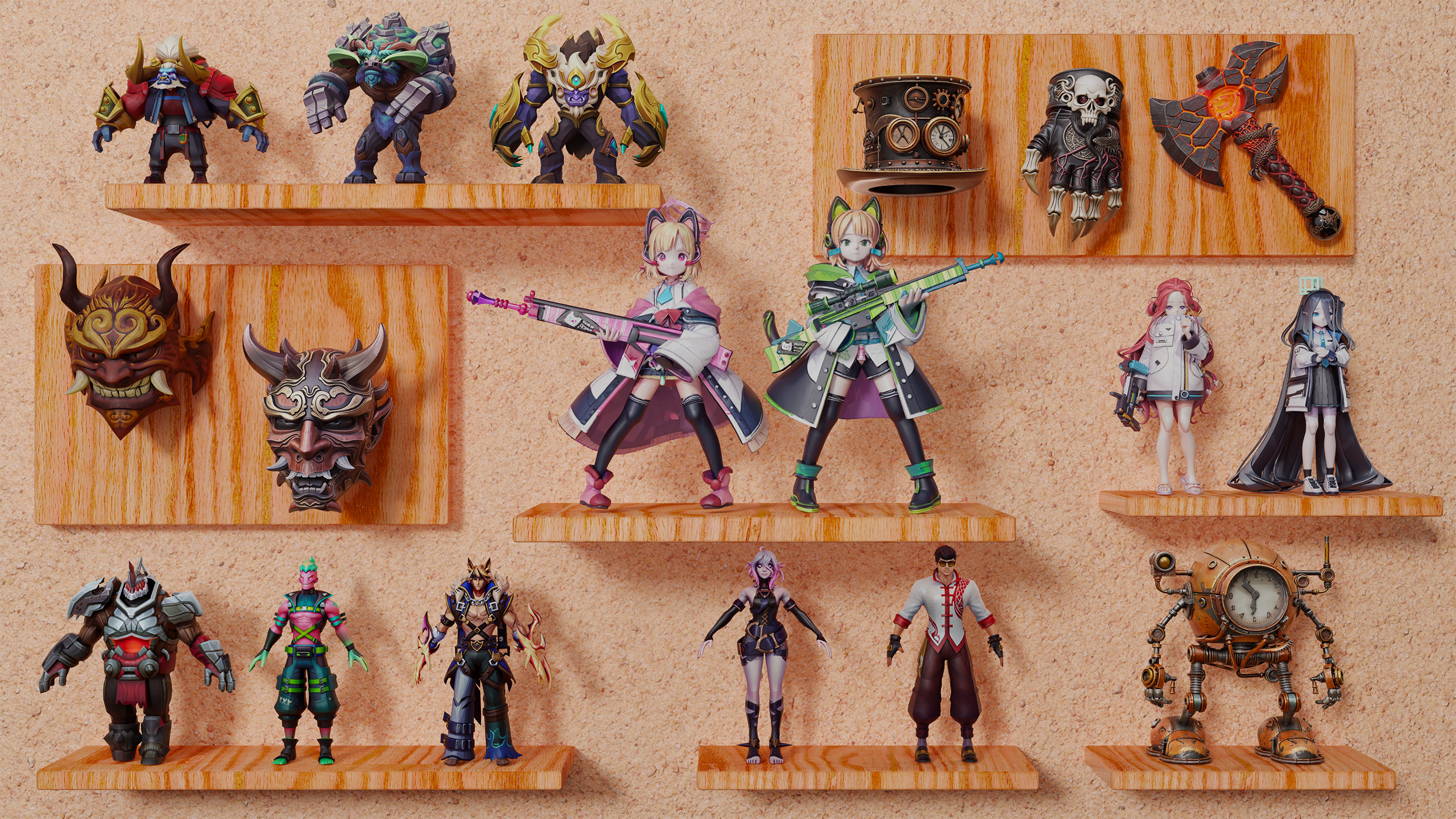
CaliTex: Geometry-Calibrated Attention for View-Coherent 3D Texture Generation
Chenyu Liu, Hongze Chen, Jingzhi Bao, Lingting Zhu, Runze Zhang, Weikai Chen, Zeyu Hu, Yingda Yin, Keyang Luo, Xin Wang
IEEE/CVF Conference on Computer Vision and Pattern Recognition.CVPR 2026
A framework of geometry-calibrated attention (geo-aligned attention + condition-routed attention) achieves strong texture alignment with 3D structure. CaliTex produces cross-view consistent textures outperforming both open-source and commercial methods (Hunyuan3D 2.1/3.0).

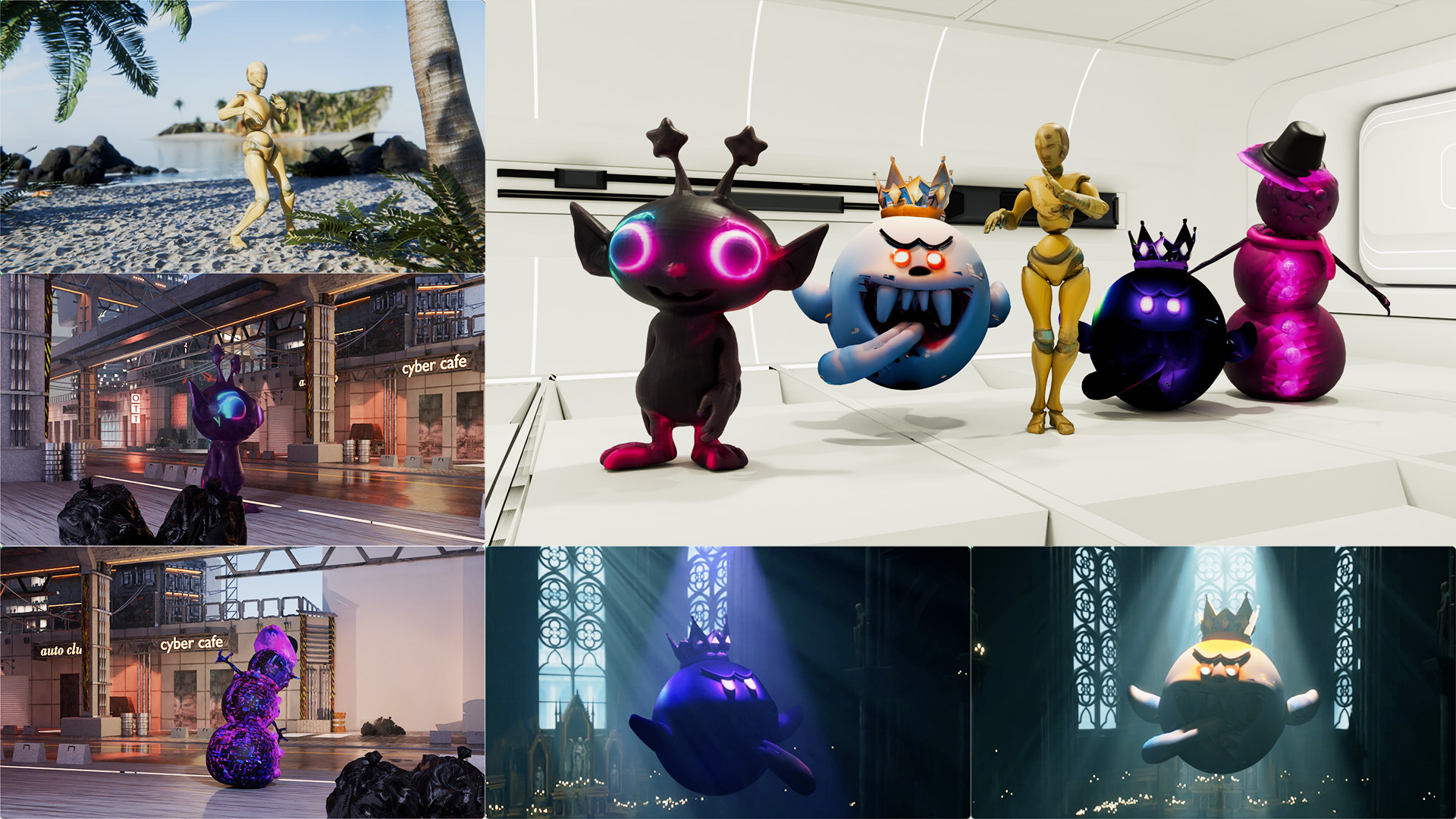
LumiTex: Towards High-Fidelity PBR Texture Generation with Illumination Context
Jingzhi Bao*, Hongze Chen*, Lingting Zhu, Chenyu Liu, Runze Zhang, Keyang Luo, Zeyu Hu, Weikai Chen, Yingda Yin, Xin Wang, Zehong Lin, Jun Zhang, Xiaoguang Han
International Conference on Learning Representations.ICLR 2026
A production-ready PBR generation method that surpasses SoTA open-source and commercial methods (Hunyuan3D 2.1, Meshy-5, Tripo v2.5).
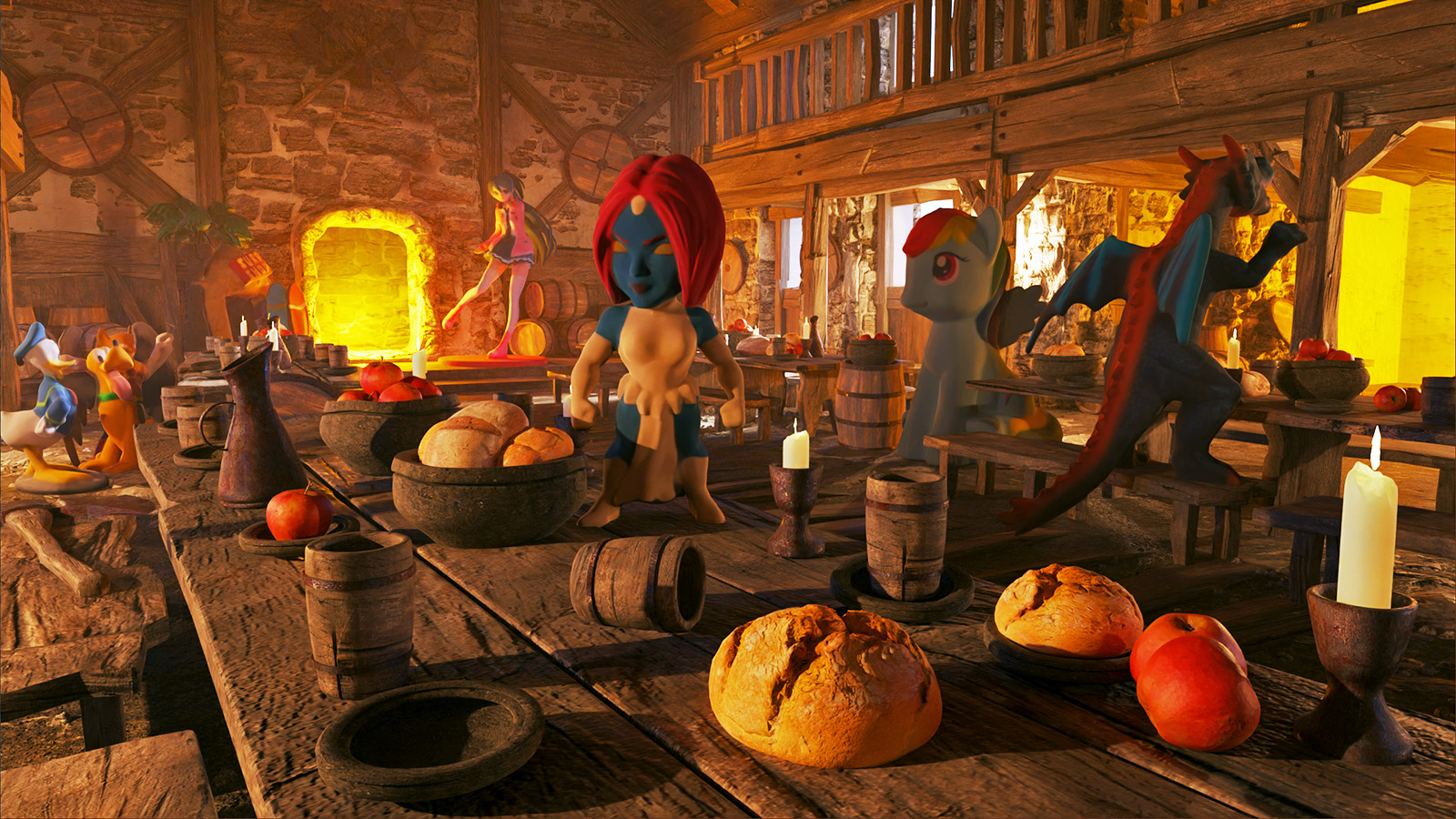
Tex4D: Zero-shot 4D Scene Texturing with Video Diffusion Models
Jingzhi Bao, Xueting Li, Ming-Hsuan Yang
arXiv preprint, 2024.
A zero-shot method that proposes to guide video model generation with 3D geometry priors from mesh animations for control.
Photometric Inverse Rendering: Shading Cues Modeling and Reflectance Regularization
Jingzhi Bao, Guanying Chen, Shuguang Cui
International Conference on 3D Vision.3DV 2025
A differentiable inverse rendering framework that jointly optimizes lighting and materials for photometric images, achieving accurate self-shadow handling and inter-reflection estimation. DINO-based feature distillation delivers more consistent surface reflectance decomposition.